
Orlando Water: Hard Water Scale, PFAS and Well Water Explained
Galene Water Treatment · 5 min read
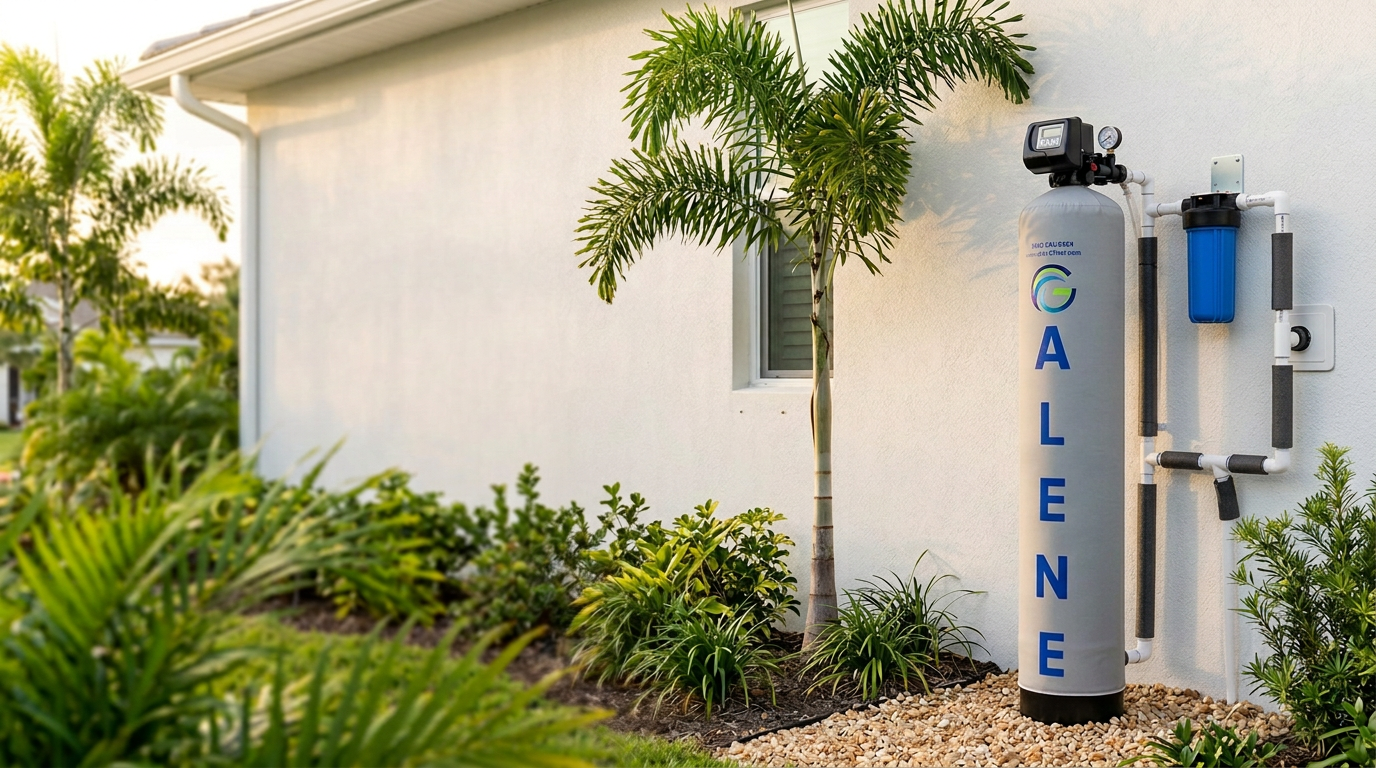
When Galene's specialists visit homes around Orlando, two topics come up again and again. The first is hard water scale: the white buildup on faucets, the spots on glassware, and the film on shower doors. The second is PFAS, the group of man-made chemicals often called "forever chemicals." Add in the many Orlando-area homes that run on private wells, and you have three very different water questions in one metro area.
This article walks through each one in plain language so you know what to look for and what to ask before choosing a water treatment system.
Why Orlando homes deal with hard water scale
Central Florida sits on top of the Floridan aquifer, a huge layer of porous limestone that holds groundwater. As water moves through limestone, it dissolves calcium and magnesium. Those minerals make water hard. When the water is heated or evaporates, the minerals come back out as scale.
- Crusty white deposits on faucets and shower heads.
- Spotty dishes and cloudy glassware.
- Soap scum that keeps coming back on tubs and tile.
- Scale inside water heaters, kettles and coffee makers.
- Laundry that feels stiff after washing.
Scale is mostly a nuisance at first, but it adds up. It can clog aerators and shower heads, coat heating elements, and force appliances to work harder than they should.
Your options for hard water
There are two main approaches. A traditional salt-based softener removes calcium and magnesium through ion exchange. It is effective at reducing hardness, but it needs regular salt refills and runs regeneration cycles that use water. Salt-free conditioning, on the other hand, is designed to reduce scale without removing the hardness minerals, and it needs no salt or regeneration. It is not softening, and it is worth understanding the difference before you choose.
What is PFAS, and why do people ask about it?
PFAS stands for per- and polyfluoroalkyl substances. They are a large family of man-made chemicals that have been used for decades in products such as nonstick cookware, water-resistant fabrics, food packaging and some firefighting foams. They are nicknamed "forever chemicals" because they break down very slowly in the environment.
Because PFAS can move through soil and into water sources, they have become a growing topic for homeowners and regulators. The U.S. Environmental Protection Agency has set national drinking water standards for several PFAS. If you want to learn more about the health and regulatory side, the EPA's PFAS pages are a reliable starting point.
How can I find out if my water has PFAS?
If you are on city water, start with your utility's annual water quality report, sometimes called a Consumer Confidence Report. It lists what the utility tested for and what it found. Utilities test on their own schedule, so the report reflects sampling at the plant and in the system rather than at your specific tap.
If you are on a private well, there is no utility report. PFAS testing requires a certified laboratory, so ask about lab testing if PFAS is a concern for your well.
How Galene approaches PFAS
Galene's Pro media is designed to target PFAS, along with other common concerns such as chlorine and fluoride. It is installed as part of a whole-home system on your main water line, so treated water reaches every tap, shower and appliance. When you receive a recommendation, ask your specialist to explain the system's documented performance for the specific concerns you care about.
Many homeowners also add an under-sink reverse osmosis system in the kitchen for an extra layer of treatment on drinking and cooking water. Galene offers a free under-sink RO system with a whole-home installation.
What if my Orlando home is on a private well?
A good number of homes in and around Orlando draw their water from a private well instead of a city utility. That changes things in an important way. City water is tested and treated by the utility before it reaches you, and the utility publishes an annual water quality report. A private well has no utility behind it. The homeowner is responsible for testing the water and for treating whatever the testing finds.
Well water in Florida comes from groundwater, and groundwater picks up whatever is in the rock and soil it moves through. Depending on the well, that can mean hardness minerals, iron, manganese, sulfur compounds, or other substances. Two wells on the same street can produce noticeably different water, because depth, age and construction all play a part.
- Test your well regularly, and again any time the taste, color or smell changes.
- Test after flooding, storms, or nearby construction that may disturb the ground.
- Match any treatment to your actual test results rather than guessing.
- Ask how the recommended system handles each issue your test found.
Galene's specialists test well water at your home during the free assessment. The recommendation you receive is based on what is in your water, not on a one-size-fits-all package.
What happens during a free in-home water assessment?
A Galene water specialist comes to your Orlando home at a time that works for you. They test your water on the spot, look at where your main line enters the house, and talk with you about what you have noticed: spots, smells, stains, taste, or the upkeep of an existing system.
From there you get a recommendation for your home and an exact written quote. There is no pressure and no obligation. Galene offers factory-direct pricing, uses 50% more filtration media in its systems, and backs installations with a 30-day money-back guarantee. If you are not 100% satisfied, Galene will remove the system and give you a full refund within 30 days.
Questions to ask before you choose a system
- What did my water test find, and which of those issues does this system address?
- Is the system installed for the whole home or a single faucet?
- What ongoing maintenance or filter changes will it need, and what do they cost?
- What work is included in the installation quote?
- What guarantee comes with the system if I'm not satisfied?
Clear answers to these questions make it much easier to compare quotes and pick a system you will be happy with for years.
The bottom line
Every area has its own water story, and Orlando is no different. The most useful first step is simple: find out what is actually in your water. Once you know, choosing the right treatment becomes a straightforward decision instead of a guess.
NEXT STEP
A Galene water specialist can test your water at home for free and recommend a system that fits your home.
See Orlando options