
Melbourne, FL Water: Why It Smells, Stains Silverware and Tastes Off
Galene Water Treatment · 5 min read
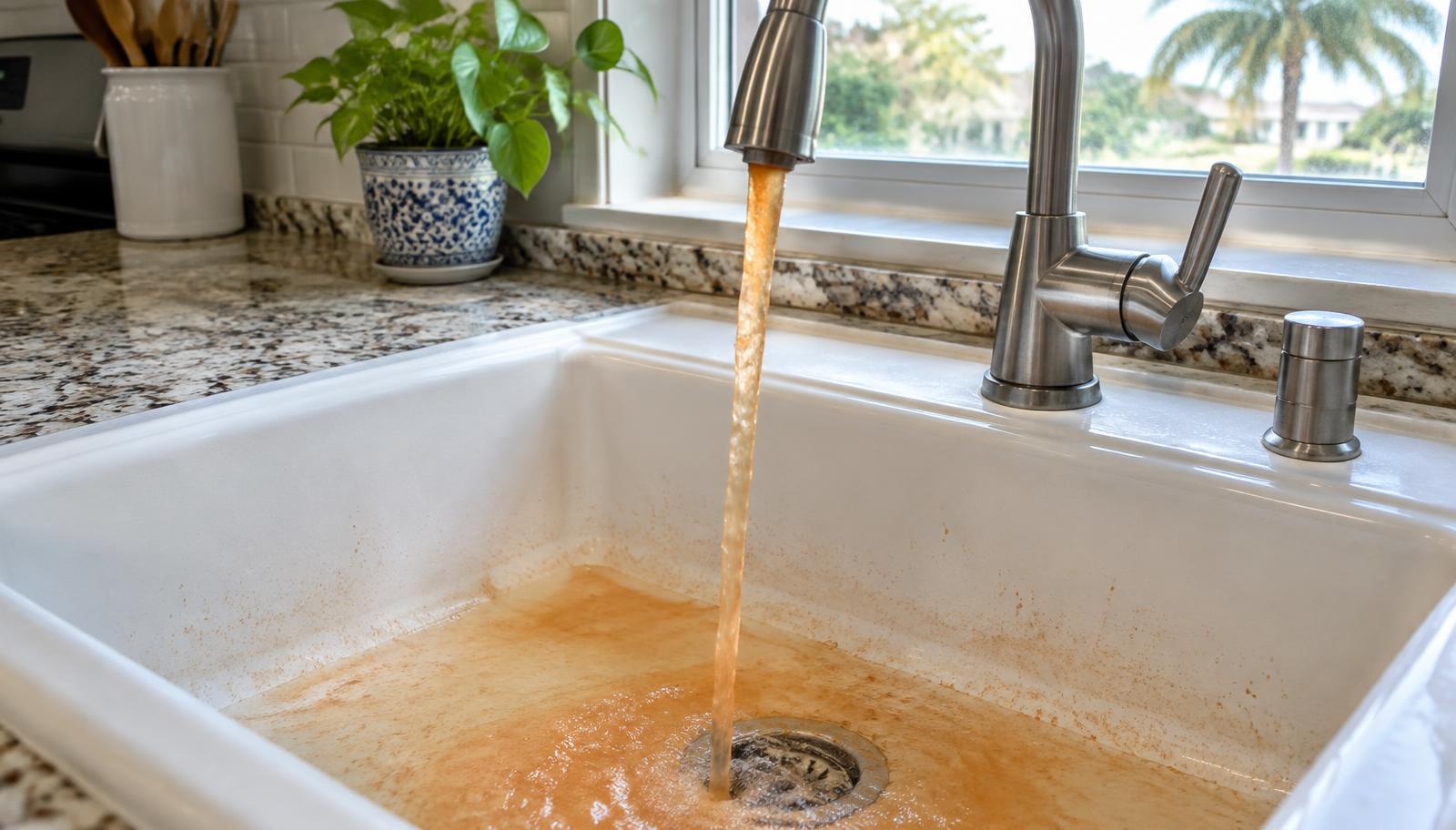
Homeowners in Melbourne describe their water in very specific ways. It smells, sometimes like rotten eggs. It leaves rust-colored spots on silverware, sinks and toilet bowls. And for many people who moved down from the northern states, it simply does not taste like the water they grew up with. "I want my water to taste like it did up north" is something Galene's specialists hear often on the Space Coast.
The good news is that each of these complaints usually has an identifiable cause. Once you know the cause, you can treat it. This guide explains the most common reasons behind smelly water, rust stains and off tastes, and what you can do about them.
Why does my water smell like rotten eggs?
A rotten-egg or sulfur smell is usually caused by hydrogen sulfide gas. It forms naturally underground when certain bacteria break down sulfur and organic matter, and it dissolves into groundwater. When that water comes out of your faucet or shower, the gas is released and you smell it.
Where you notice the smell can help narrow down the source:
- Every tap, hot and cold: the sulfur is most likely in the water supply itself, which is common with wells.
- Only the hot water: the smell may be forming inside the water heater, often linked to the anode rod.
- Only one sink: the source may be bacteria in that drain rather than the water.
Why are there rust spots on my silverware and sinks?
Orange, red or brown stains usually point to iron in the water. Iron is common in Florida groundwater, and well water in particular can carry enough of it to stain fixtures, laundry and dishes. Once iron in the water meets air, it oxidizes and leaves those familiar rust-colored marks.
Some homeowners notice spots on stainless silverware after it goes through the dishwasher. Iron and other minerals in the water can leave deposits on metal during the wash and dry cycles. Manganese, which often travels with iron, can leave darker brown or black stains.
- Rust-colored rings in toilets and sinks.
- Orange or brown stains in tubs and showers.
- Spots on silverware and dishes after washing.
- Laundry, especially whites, that turns dingy or yellow.
Why doesn't my water taste like it did up north?
Water tastes different from region to region because it comes from different sources and is treated in different ways. Many northern cities draw water from lakes, rivers or reservoirs fed by rain and snowmelt. Much of Florida's water comes from groundwater that has spent time in limestone, which can give it a mineral taste.
Other things can change taste, too. City water is disinfected with chlorine or chloramine to keep it safe on the way to your home, and some people notice that taste. Sulfur and iron in well water have very distinct flavors. Hardness minerals can make water taste chalky or flat to some people.
How to fix smelly, staining, off-tasting water
Because these problems come from different things, the fix depends on what is actually in your water. That is why testing comes first. A treatment plan for sulfur odor looks different from one for iron staining, and many homes need to address both.
- Whole-home treatment at the main line, so every tap, shower and appliance gets treated water.
- Treatment matched to test results for sulfur, iron or both.
- An under-sink reverse osmosis system in the kitchen for extra-clean drinking water.
- Water heater service if the smell is only in the hot water.
Pitchers and fridge filters can improve the taste of a glass of water, but they won't stop the smell in the shower or the stains in the sink. Treating the water where it enters your home solves the problem everywhere at once.
What if my Melbourne home is on a private well?
A good number of homes in and around Melbourne draw their water from a private well instead of a city utility. That changes things in an important way. City water is tested and treated by the utility before it reaches you, and the utility publishes an annual water quality report. A private well has no utility behind it. The homeowner is responsible for testing the water and for treating whatever the testing finds.
Well water in Florida comes from groundwater, and groundwater picks up whatever is in the rock and soil it moves through. Depending on the well, that can mean hardness minerals, iron, manganese, sulfur compounds, or other substances. Two wells on the same street can produce noticeably different water, because depth, age and construction all play a part.
- Test your well regularly, and again any time the taste, color or smell changes.
- Test after flooding, storms, or nearby construction that may disturb the ground.
- Match any treatment to your actual test results rather than guessing.
- Ask how the recommended system handles each issue your test found.
Galene's specialists test well water at your home during the free assessment. The recommendation you receive is based on what is in your water, not on a one-size-fits-all package.
What happens during a free in-home water assessment?
A Galene water specialist comes to your Melbourne home at a time that works for you. They test your water on the spot, look at where your main line enters the house, and talk with you about what you have noticed: spots, smells, stains, taste, or the upkeep of an existing system.
From there you get a recommendation for your home and an exact written quote. There is no pressure and no obligation. Galene offers factory-direct pricing, uses 50% more filtration media in its systems, and backs installations with a 30-day money-back guarantee. If you are not 100% satisfied, Galene will remove the system and give you a full refund within 30 days.
Questions to ask before you choose a system
- What did my water test find, and which of those issues does this system address?
- Is the system installed for the whole home or a single faucet?
- What ongoing maintenance or filter changes will it need, and what do they cost?
- What work is included in the installation quote?
- What guarantee comes with the system if I'm not satisfied?
Clear answers to these questions make it much easier to compare quotes and pick a system you will be happy with for years.
The bottom line
Every area has its own water story, and Melbourne is no different. The most useful first step is simple: find out what is actually in your water. Once you know, choosing the right treatment becomes a straightforward decision instead of a guess.
NEXT STEP
A Galene water specialist can test your water at home for free and recommend a system that fits your home.
See Melbourne options